EUROPEAN PARLIAMENT PROPOSES CHANGES TO COPYRIGHT PROTECTION IN THE AGE OF GENERATIVE AI
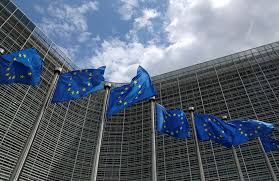
In June 2025, the European Parliament (“EP”) published its draft report on “Copyright and generative artificial intelligence – opportunities and challenges” (available here). The draft report calls on the European Commission to make a series of changes to the way that copyright is protected in the age of generative AI (“GenAI”). The EP notes the challenges in finding a balance between respecting existing laws and protecting the rights of content creators on the one hand, while not hindering the development of AI technologies in the European Union on the other. In its report, the EP focuses on the perceived copyright-related risks posed at the GenAI training stage and the GenAI output stage.
GenAI training
At the GenAI training stage, the EP identifies the conflicting interests of content creators and GenAI providers. It considers that the current text and data mining (“TDM”) exception to copyright does not satisfactorily address the concerns of the former regarding uses of their work – in particular because that exception “was not drafted with the intention of enabling the use en masse of copyright-protected material by all through generative AI.” On the other hand, the EP recognizes that “enabling the lawful use of such datasets within the European Union” is “crucial” for Europe’s technological innovation and competitiveness. Having identified the problem, the EP sees the solution to this inherent tension comprising three elements:
1. Creation of a licensing regime in Europe enabling GenAI providers to obtain licenses for the use of copyright-protected works.
Any licensing regime would give content creators the ability to opt out of having their works used in AI training altogether, using a machine-readable signal, which could be recorded in a centralized, European register maintained by the EU Intellectual Property Office (EUIPO). (This opt-out regime would be distinct from the opt-out established by the existing TDM exception.)
The EUIPO could also be given the responsibility of mediating the licensing process between GenAI providers and content creators as part of a “workable, innovation-friendly framework,” which would create a machine-readable register of licence offers.
In addition, the EP calls on the Commission to “immediately” introduce a remuneration obligation on GenAI providers that aggregate and disseminate press publishers’ content in search results and other digital services. The EP considers that a compensation regime is warranted on the basis that GenAI providers are using copyright-protected press content to create online services that “directly compete with those of the rights holders.”
2. Introduction of a transparency requirement.
The EP envisages GenAI providers, deployers and others in the AI value chain being required to provide “an itemized list identifying each copyright-protected content used for training” regardless of the jurisdiction in which the underlying AI models were trained.
The EP considers the existing requirement in the EU AI Act on AI developers to produce a “sufficiently detailed summary” of works used to be “completely inadequate” because it does not provide content creators with sufficient information to determine if their works were used for training. Instead, the EP calls on the Commission to propose “full, actionable transparency and source documentation by providers and deployers of general-purpose AI models and systems, with regard to the use of any copyright-protected work or other protected subject matter for any purpose.”
To address the concerns of GenAI providers, deployers and others that their trade secrets may be undermined by greater transparency requirements, the EP anticipates that the EUIPO may be able to play an intermediary role.
The EP also suggests that the transparency obligation could be fulfilled by requiring copyright-protected works to be digitally labelled using watermarks, for example. This would enable content creators to search for their works among the materials used for training.
Under any new transparency regime, the EP would like to see GenAI providers and deployers face legal liability for failure to fully comply with their transparency obligations in relation to copyright-protected works used for training purposes.
3. Further harmonization of Member State copyright law.
In order to achieve the aims set out by the EP, it considers that “copyright law needs generally to be adapted to technological developments,” which could include “further European harmonisation of Member States’ national copyright laws.”
The EP calls on the Commission to “urgently conduct a thorough assessment of whether the existing EU copyright acquis adequately addresses the legal uncertainty and competitive effects associated with the use of protected works and other subject matter for the training of generative AI systems, as well as the dissemination of AI-generated content that may substitute human creation.”
GenAI output
The EP identifies various concerns at the AI output stage – most notably that AI-generated content (i.e., content created without human authorship) “should remain ineligible for copyright protection” and that AI-generated content should be labelled as such.
Compromise amendments
In late January 2026, a leaked version of the EP’s compromise amendments to its draft report became available (see here). The compromise amendments for the most part simply beef up the proposals in the earlier, draft report – for example, by proposing a more robust licensing and remuneration regime for training data and post-training uses, and enhanced transparency obligations on GenAI providers. However, there are a couple of proposals worth noting:
Territoriality: The EP proposes that the territoriality principle under copyright law, which provides that copyright is limited to the jurisdiction in which it is granted and protected, should be construed broadly so that “when generative AI models and systems are placed or made available on the Union market, EU copyright law . . . applies regardless of the jurisdiction in which the copyright-relevant acts underpinning the training of those genAI models and systems takes place.” If this proposal were to be adopted, a GenAI provider that trains its models outside of the EU on works protected by EU copyright law could face copyright liability in the EU if it subsequently places its system or model on the EU market. The compromise amendments go further to say that GenAI providers that do not comply with EU copyright law when training their models “should be barred from operating within the Union.” This proposal would complement existing provisions under the EU AI Act (notably recital 106), but would mark an unorthodox interpretation of the principle of territoriality under copyright law.
Deepfakes: The EP calls on the Commission to “protect individuals against the dissemination of manipulated and AI-generated digital image, audio or video content” which resemble or imitate natural persons – in other words, deepfakes. The EP does not propose specific measures for dealing with this issue, save in general terms, that “digital service providers shall have a clear obligation to act against such illegal use of an individual’s right to their own body, facial features and voice and intellectual property.” It is also unclear whether this obligation would fall under existing legislation, such as the Digital Services Act, under copyright law, or under new legislation.
Next steps
On 28 January 2026, EP lawmakers voted on the report, and a vote in the full Parliament will take place in March 2026. For more information, see the EP procedural file here.
The Covington team continues to monitor regulatory developments on AI. We regularly advise the world’s top technology companies on their most challenging regulatory and compliance issues in the EU and other major markets. If you have questions about AI regulation, or other tech regulatory matters, we are happy to assist with any queries.
Information take from: https://www.insideglobaltech.com/2026/02/16/european-parliament-proposes-changes-to-copyright-protection-in-the-age-of-generative-ai/
Imagen tomada de: https://www.reuters.com/technology/eu-lawmakers-committee-reaches-deal-artificial-intelligence-act-2023-04-27/
 Spanish
  English