CHEERLEADING MUSIC LICENSING IN SPORTS: CLICKNCLEAR’S CHANTAL EPP
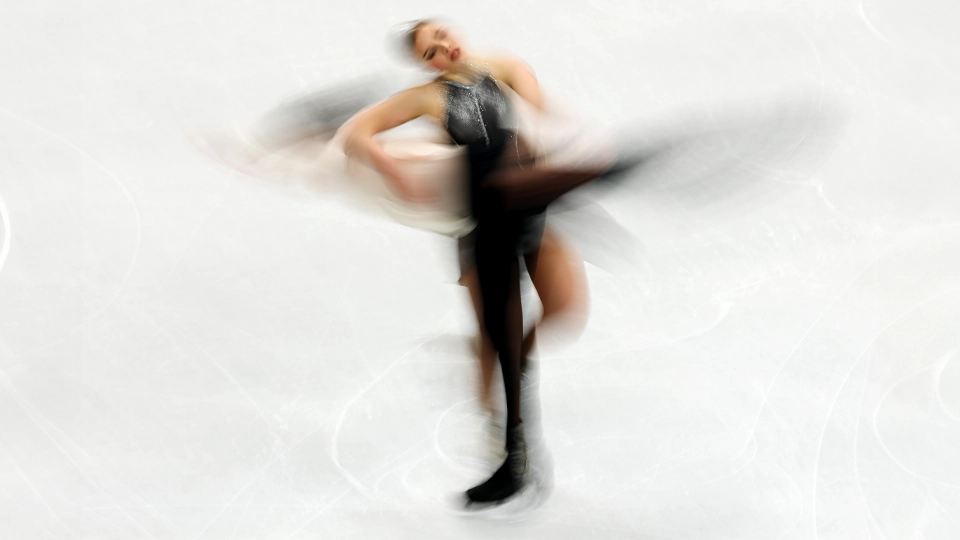
“When Sony Music Entertainment sued multiple cheerleading music companies in 2014, world champion cheerleader Chantal Epp saw an opportunity. Her startup, ClicknClear, obtains music licenses for Olympic and grassroots athletes across major sports, tapping into a billion dollar market.”.
“When Sony Music Entertainment sued multiple cheerleading music companies in 2014, world champion cheerleader Chantal Epp saw an opportunity. Her startup, ClicknClear, obtains music licenses for Olympic and grassroots athletes across major sports, tapping into a billion dollar market.”.
Athletes in figure skating, gymnastics and other choreographed sports routinely perform to music without securing the necessary rights to use it in connection with their routine. Founded in 2016 by British two-time world champion cheerleader Chantal Epp, ClicknClear is tapping into an estimated $2.4 billion annual revenue opportunity amid legal challenges.
In February 2026, Spanish figure skater Tomàs-Llorenç Guarino Sabaté kicked up a mini media storm when he almost had to scrap his popular Minions-themed routine just days before competition began at the Milano Cortina Winter Olympic Games.
While the issue centered on Guarino Sabaté’s license request being denied rather than music copyright infringement, because ClicknClear is the recommended rights-clearance provider for figure skating (among other sports) Epp found herself fielding questions.
“After staying up for most of the night last night, making a lot of calls and sending a lot of emails, we received approval on [Tomàs’s] remaining track,” Epp posted on LinkedIn. “I’m unbelievably proud of making this happen.”
ClicknClear has been involved in the majority of rights clearances for athletes ahead of the Games. Its founder says Guarino Sabaté’s case spotlights the need for greater awareness and education, and points to a structural issue that her business is designed to address: the 100 billion dollar annual monetization gap in the music industry compared with video games and film.
This gap exists because there is no global music ownership database or universal licensing system to connect music owners with users. Solving this problem, starting with sports, is Epp’s focus. (Take a look at another WIPO Magazine article that gives the creators’ perspective.)
A music licensing platform for artistic sports
ClicknClear offers athletes more than 3.6 million tracks to choose from. The company also works with event organizers and federations by offering license-verification technology.
“We’ve cleared all of the rights, from what the athletes need all the way through to the event organizers, so that athletes can instantly license music from our platform,” Epp says. In her experience, “big organizations in general want to ensure that things are done legally”.
Indeed, the International Olympic Committee (IOC) has always required athletes to obtain the necessary authorisations and consent to use music in their Olympic routines. Still, athletes face licensing questions, and the story involving Guarino Sabaté was not the first of its kind to make headlines.
In fact, it was two legal developments, in 2014 and 2022, that helped Epp to crystallize her business case.
Sony lawsuit over cheerleading competition music
In 2014, Sony Music Entertainment sued several music-editing companies in the United States for selling unauthorized remixes to cheerleading squads.
At the same time, Epp was working in music licensing while pursuing competitive cheerleading. She had also started her first music production company for sports at university. When the Sony lawsuit emerged, she recognized an opportunity to apply her professional expertise to her sport. “I can solve that problem,” she thought. “I’ll just put everything I know about music licensing into cheerleading.”
Epp says that Sony settling the lawsuit changed how music was used in the sport and led her to create ClicknClear. She worked with lawyers close to the case to develop the licensing agreement that the industry needed, and which remains the core of her business.
A growing catalogue through major deals
Today, ClicknClear’s catalogue is growing through its deals with record labels and music publishers in more than 100 countries. Sony Music was the first major label to sign up, says Epp, followed by majors and large independents such as Warner Music, Universal Music, Concord and BMG, as well as thousands of smaller publishers.
Moreover, in the wake of the Sabaté case, ClicknClear announced that it has signed a global recorded music deal with Universal Music Group (UMG), while the Winter Olympics were still running.
The company works with these rightsholders directly to clear a unique set of rights applicable to musical accompaniment for sports, and the license-verification technology helps event organisers and sports federations to check compliance with music licensing across all sports competitions.
The rights to use music needed by athletes differ from those sought by event organizers, who, for example, may want to distribute or broadcast filmed routines.
Another lawsuit that propelled ClicknClear along came in 2022. Following the 2022 Beijing Olympic Games, composers Aron and Robert Mardo – who operate under the name Heavy Young Heathens –sued US pair skaters Alexa Knierim and Brandon Frazier, along with NBC Universal, for unauthorized use of their “House of the Rising Sun” cover.
The case – which was settled for an undisclosed amount estimated at about $1.4 million – underlines how such developments have become more high-profile in recent years, and may have contributed to event organizers looking ever more closely at the rules.
IOC guidelines for music in sports
The IOC updated its guidelines for music in sports in 2025. They make clear just how complex rights clearances can be if athletes attempt to secure them alone.
In the guidelines, the IOC warns about cases such as Guarino Sabaté’s, reminding athletes that they “wouldn’t want to have worked hard on a routine to a particular piece of music, only to discover later on that [they] can’t use it”.
The guidance outlines that, when using a piece of music for a routine, athletes “should be aware that the music is like a piece of property with multiple ‘owners’”. They might include the composer, the producer who recorded it and the writer of the lyrics, each of whom may hold copyright, as well as the music’s performers, who may hold performers’ rights. (Read more about music and intellectual property.)
Epp takes the example of a figure skater who choreographs a routine set to a mash-up of several songs. Each song featured would likely require permission from artists, composers and/or music rights holders.
Music right clearance for use in sports competitions
Failure to license can have major consequences. Canadian ice dancers Marie-Jade Lauriault and Romain Le Gac had to change their 1990s-themed routine just before the 2026 Winter Olympic Games because they reportedly could not secure licensing for their preferred Prince songs in time.
ClicknClear could not have helped directly in this case, but could have assisted the athletes in detecting the issue sooner.
Searching the company’s website for Prince yields the following notification: “The music of Prince is restricted by rights holders, so may not be available instantly. Requests can be made; however, they are unlikely to be approved. We would recommend searching for an alternative artist.”
The company also offers help with clearing rights for tracks not already in its catalog, but that requires a customized quote.
For most cases, however, ClicknClear is a one-stop shop for athletes and performers. And, according to Epp, using it is advantageous for all involved.
Epp stresses that, in cases where an individual seeks to obtain music rights outside the ClicknClear platform, music owners may decide how their work is used and set license fees that reflect the manual overheads involved. Moreover, they may not always approve the use of their music in routines.
Licenses acquired through ClicknClear include such rights and cost $10 to $25 per track for one year of use in one country. In contrast, in the Sony case, defendants charged cheer teams $75 to $1,500 per mix of unlicensed music, and Sony sought statutory damages of up to $150,000 per song for willful infringement. The case was settled out of court.
Partnerships with sporting organizers and federations
Event organizers and large sporting organizations often use ClicknClear’s compliance technology, says Epp. World championships and big competitions encourage athletes to use ClicknClear to submit their music and receive proof of license in return, leaving“ an auditable trail of licensing”, says Epp.
ClicknClear also works with sports federations, such as World Gymnastics and World Aquatics, to help “demystify music copyright”, she says. “Largely, we’re working with the governance structures of each of the sports.”
Epp attributes her success in securing major partnerships to her ability to address an unmet need. “We’re solving a problem no one else is solving,” she says, noting that she approached major sports organizers directly once the scope of the licensing challenges became apparent.
Licensing for the future of music in sports
Epp knows both sides of the game. As a two-time world champion in disability-inclusive cheerleading, she and her husband have helped pioneer the sport in 18 countries. Together, they created the first Paralympic-eligible cheerleading team, set to perform at the 2026 World Championships and mark the 10-year anniversary of inclusive cheerleading.
Epp also hopes to showcase the team at the Los Angeles Summer Olympic Games in 2028, to help the International Federation gain Paralympic recognition and build a pathway for the sport. She notes that as ever when raising awareness of new issues, the process takes time.
Her advice to other founders reflects this experience: “It’s never a straight road but a case of being adaptable to every situation and open-minded to keep pushing your path forward.”
Such adaptability extends to protecting her own innovations. Epp uses trade secrets, copyright protection for her code, and trademarks, which in future she plans to register internationally through the World Intellectual Property Organization (WIPO) Madrid System. “I learnt about this in a workshop,” she says, which she attended as a WIPO Global Awards winner in 2025.
ClicknClear is launching the world’s first blanket music license based on proprietary technology. It is made for Video-on-Demand channels that show choreographed sports, and the company expects the market to reach a similar scale as the one for athlete licenses.
Information take from : https://www.wipo.int/en/web/wipo-magazine/articles/cheerleading-music-licensing-in-sports-clicknclears-chantal-epp-89538

 Spanish