AS ARTIFICIAL INTELLIGENCE DRIVES HEALTH INNOVATIONS, UN AGENCIES LAUNCH JOINT STRATEGIC GUIDELINES
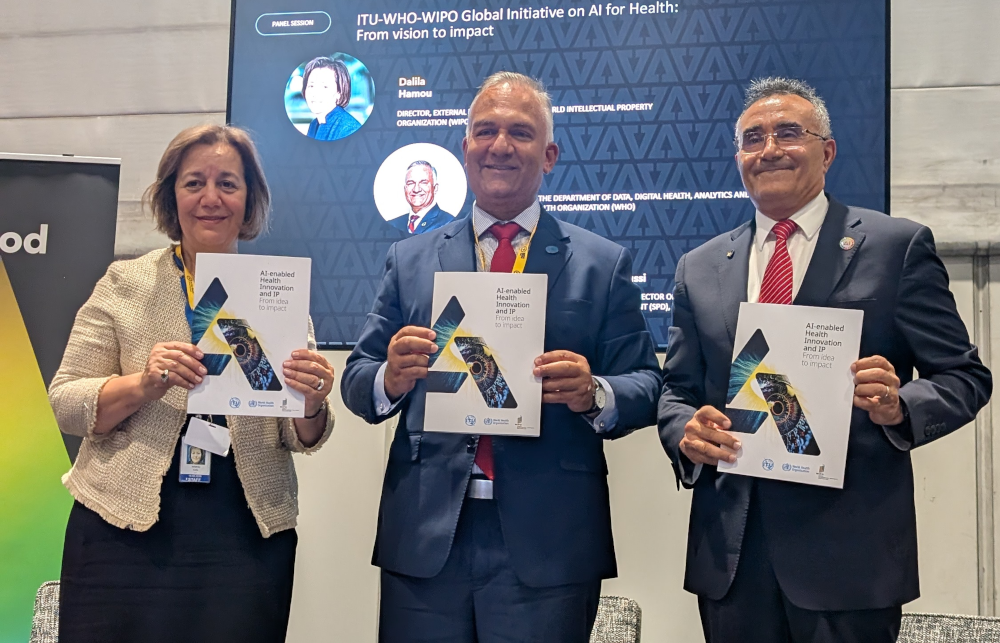
As artificial intelligence drives rapid health innovations, global guardrails, equitable data, and local capacity are needed to ensure equitable progress. To address this, a landmark framework launched by three United Nations agencies lays out a strategic roadmap for innovators. Meanwhile, health leaders emphasise that lower-income regions must become co-creators of future innovations.
New guidelines for the use of artificial intelligence lay out a roadmap for health innovators to navigate complex intellectual property, data governance, and regulatory pathways. The landmark framework, co-authored by experts from the World Health Organization (WHO), the International Telecommunication Union (ITU), and the World Intellectual Property Organization (WIPO), was presented at the “AI for Good” Global Summit in Geneva last week.
“This collaboration between these three organisations brings our expertise together and shows how we can have a collaboration in this very important field,” said Dalila Hamou, director of the external relations division at WIPO, at the Summit.
The joint initiative arrives as technological innovation accelerates, with the number of new generative artificial intelligence patents published over the last two years topping the total from the entire preceding decade. For instance, AI-assisted liquid biopsy tests can now predictively detect multiple cancers at stage one – when survival rates reach up to 92% – long before physical symptoms manifest.
At the same time, critics warn that the rapid deployment of unregulated advanced algorithms increases risks and may end up amplifying existing health disparities and deepening social exclusion.
“The few exceptions when technology actually had an equitable positive impact in society was when equity was included by design,” said Ricardo Baptista Leite, CEO of HealthAI, in an interview with Health Policy Watch during the summit, echoing the need for guardrails.
Information take from: https://healthpolicy-watch.news/artificial-intelligence-health/
 English
  Spanish